
Sardinia - Palau
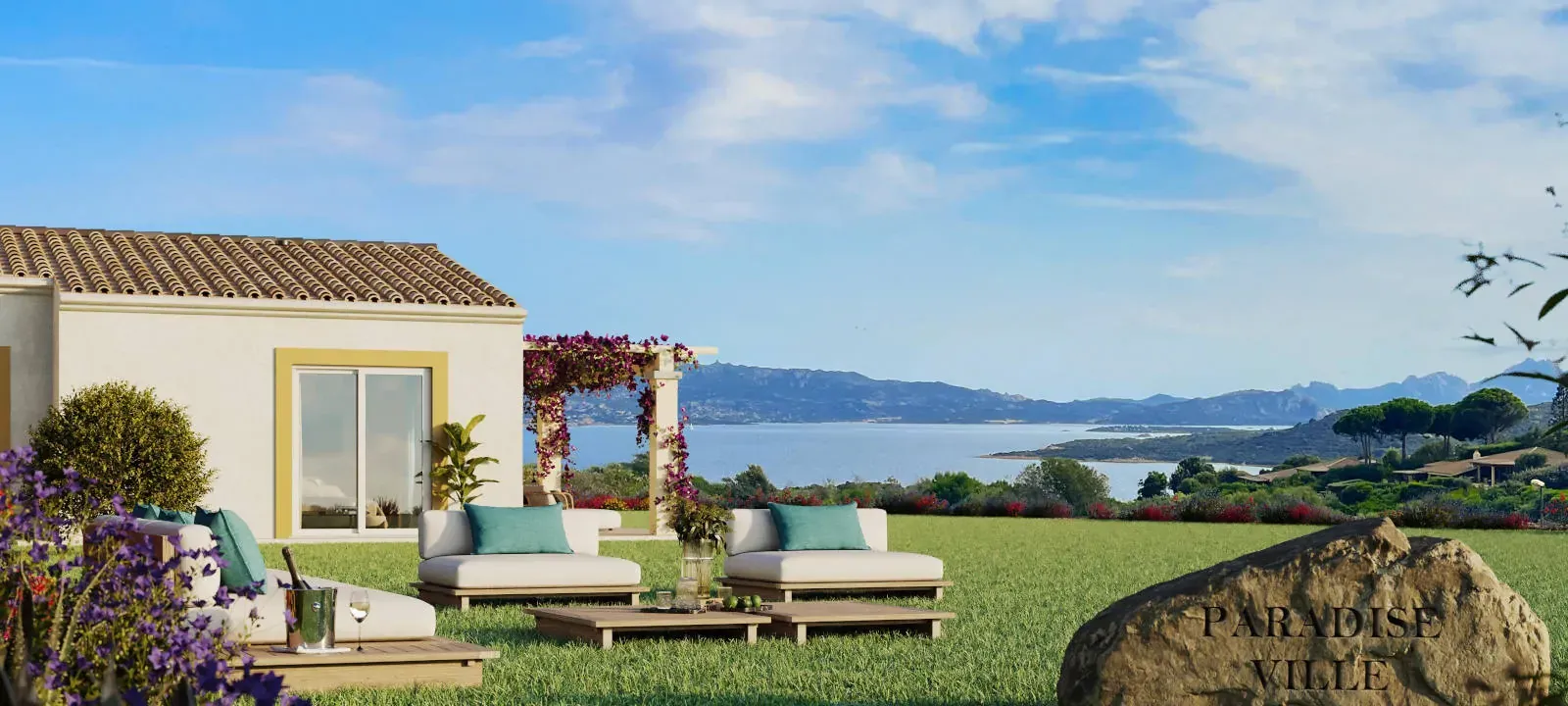
Paradise Ville
From€269,000

The visa, the tax incentives, the best places and why so many remote workers are turning a temporary experiment into a permanent home.

why italy
The 25–44 age bracket now represents one of the fastest-growing segments of the international property market in Italy. These are not buyers planning for retirement they are professionals with remote incomes, often from US, UK, or northern European companies, who have realised that where they live is a choice they are actually free to make.
Several things have converged to make Italy particularly compelling for this group in 2025 and 2026. Portugal's Non-Habitual Resident programme ended. Spain's property golden visa was abolished in April 2025. Italy, by contrast, has moved in the opposite direction introducing a dedicated visa for remote workers in 2024, maintaining the Impatriati tax regime, and actively positioning its southern regions as destinations for people who want to combine a working income with a Mediterranean life.
The country also offers something that more tax-efficient destinations cannot always match: genuine variety. Within a single visa framework and a single property market, you can choose between a cosmopolitan city with an international business scene, a baroque hilltop town in Puglia, a sea-view apartment in Sicily, a village in Sardinia with a terrace and a two-minute walk to the water. The lifestyle Italy offers at its best is not replicable elsewhere at any price. The fact that it is increasingly accessible is what has changed.
The digital nomad visa
Italy's Digital Nomad Visa was formally launched in April 2024 under a government decree, giving non-EU remote workers a clear legal pathway to live and work in Italy for the first time. Before its introduction, many remote workers were navigating Italy's visa landscape in ways that ranged from technically grey to straightforwardly irregular. The new visa resolves that.
It is designed for two distinct groups: employees working remotely for a company based outside Italy, and freelancers and self-employed professionals with clients or contracts outside Italy. Both can apply; the documentation required differs slightly.
The application is made at the Italian consulate in your home country. Processing typically takes one to three months. Once in Italy, you must apply for a permesso di soggiorno (residence permit) within eight days of arrival. The visa gives access to the Schengen Area — so weekend trips across Europe remain part of the picture.
Tax considerations
The visa handles your right to be in Italy. But the financial case for staying and potentially for buying property and making the move permanent rests significantly on Italy's Impatriati tax regime.
Under the current rules (D.Lgs. 209/2023, in force from January 2024), workers who transfer their tax residency to Italy and meet the eligibility conditions have 50% of their Italian-source income exempt from IRPEF, Italy's personal income tax, for five years. Only the remaining 50% is subject to standard Italian tax rates (23–43% depending on bracket). A 2026 ruling from Italy's Revenue Agency (Ruling No. 2/2026) confirmed that this applies to employees working remotely from Italy for a foreign employer, a significant clarification for anyone on a remote contract.
The key eligibility conditions are: not having been tax resident in Italy for at least three years before relocating; committing to maintain Italian residency for at least four years; and carrying out your work activity prevalently in Italy. The "highly qualified or specialised" skills requirement introduced with the 2024 reform applies to most professional roles in practice.
Where to base yourself
The best place to work remotely in Italy depends on what matters most to you: urban energy or coastal calm, budget or prestige, established expat infrastructure or authentic local life. Italy's diversity is one of its strengths for remote workers the choice is genuinely wide.
Beyond the Impatriati regime, several municipalities across Sicily, Puglia, Calabria, Sardinia, and Molise offer additional financial incentives specifically to attract remote workers, including cash grants, property subsidies, and preferential rates. These programmes vary significantly by town and availability.

From remote worker to property owner
It happens more consistently than most people expect. Someone arrives in Italy on a digital nomad visa or a first rental contract, intending to stay for six months to a year. A year later, they are looking at properties. Two years later, they own one.
Part of this is simply the lifestyle, Italy tends to hold people who give it a genuine chance. But there is also a financial logic that becomes clearer the longer you stay. The Impatriati tax benefit runs for five years from the date of transfer of residency. Buying a property in Italy anchors that residency in a concrete way, reinforces your position with the Italian tax authority, and transforms what might have been a temporary chapter into an investment that appreciates alongside your Italian life.
In the regions where remote workers most often settle, Sicily, Puglia, Sardinia, property prices are still accessible by northern European or American standards. A well-positioned apartment in Palermo, Lecce or Cagliari can be purchased for between €150,000 and €350,000. Coastal properties in quieter areas start lower. And unlike renting, a property you own can generate short-term rental income during the periods you are travelling offsetting running costs and contributing to its own value over time. The decision to buy is not for everyone at every stage. But for those who have been in Italy for a year and are thinking seriously about staying, the conversation around property is worth having earlier than most people expect.
Request information or book a videocall with us.